
BMS & BEMS
Climate, HVAC and the mechanical & electrical services behind the walls, engineered to run quietly in the background.
The systems you should never have to think about.
The infrastructure that keeps a home comfortable, efficient and sustainable is the part you should never notice. We control and integrate the building services behind the walls for heating, cooling, ventilation, water and power into a single, intelligent management layer.
Monitored continuously and tuned to how you actually live, a well-built BMS holds every room at the right temperature, balances energy use, and flags issues before they escalate, all without you noticing.
Comfort you feel in every room, from technology you never see.
Capabilities
Room Control
Room-by-room control of all heating and cooling systems, ensuring consistent temperatures throughout the home.
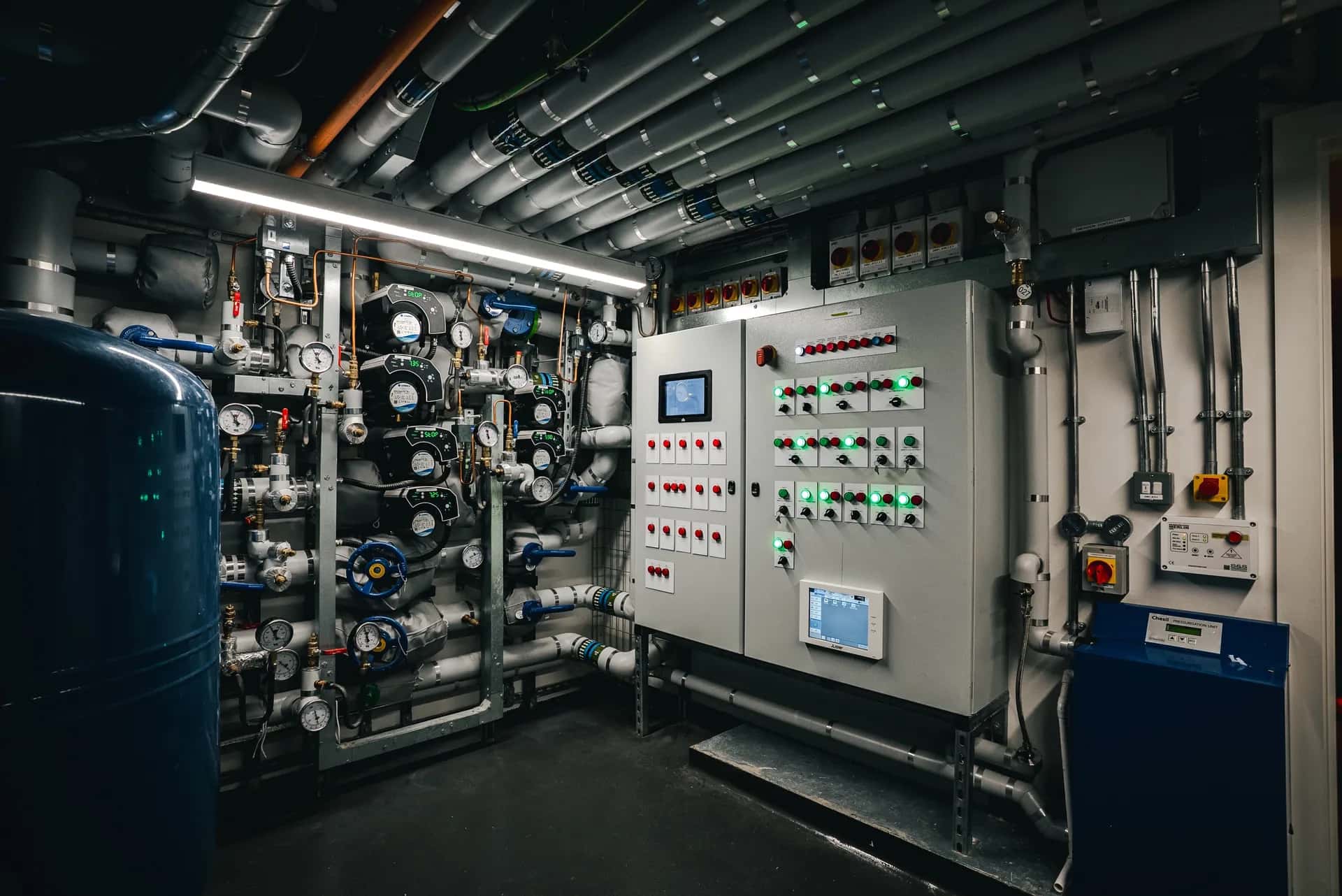
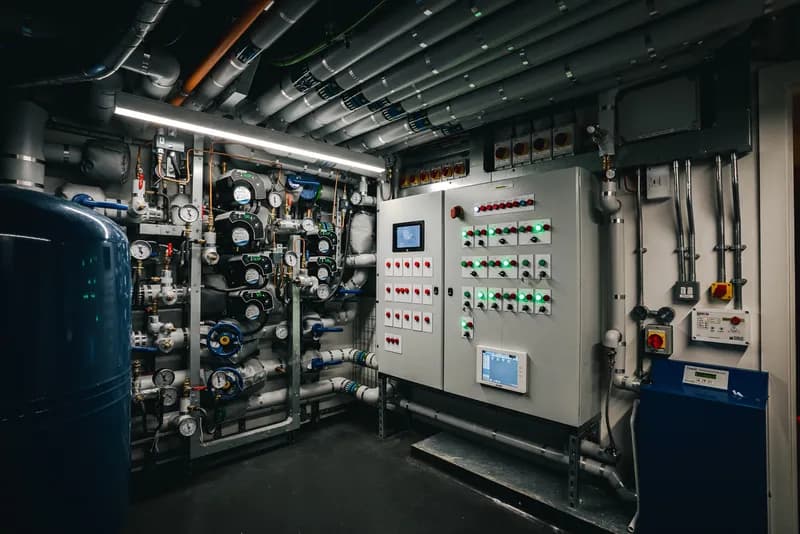
Plant Rooms
Heating, ventilation and air-conditioning plant brought under one coherent, monitored control layer.
Health & Wellbeing
Control and management of air purification systems, maintaining ideal air quality for improved comfort and wellbeing.

BMS & BEMS questions
What is a BMS or BEMS, and do I need one?
A Building Management System (BMS) is a centralised control system that monitors and manages a building's services, typically heating, ventilation, air conditioning, lighting and sometimes security and metering. A Building Energy Management System (BEMS) adds a stronger focus on measuring and reducing energy use. You are likely to need one where systems are numerous or complex enough that manual control becomes impractical, or where energy performance, comfort and reliability need to be actively managed. This is common in larger homes and most commercial buildings.
When should a BMS be designed into a project?
As early as possible, ideally at concept or early design stage, before the mechanical, electrical and structural design is fixed. Designing the BMS in early means the control strategy, cabling routes, sensor positions and plant space are planned rather than retrofitted, which avoids compromise and disruption later. Coordinating with the M&E consultant from the outset keeps the control layer consistent with the wider services design.
What is the difference between a BMS and a smart home system?
A BMS manages a building's services, typically heating, ventilation, air conditioning and sometimes lighting and metering, while a smart home or integration system focuses on how the occupant controls and experiences the home as a whole. On a prime residential project the two usually work together: the BMS runs the services reliably in the background, and the integration layer gives simple, consistent control across every system. Which function sits where is a design decision made with the wider team.
Can a BMS control heating, cooling and ventilation together?
Yes. Bringing heating, ventilation and air conditioning into a single control layer is one of the main reasons to use a BMS, so the systems work with each other rather than independently. This lets each room or zone be held at the right condition and the services respond to occupancy and the time of day. The detail is coordinated with the M&E design so responsibilities and interfaces are clear.
How does a BMS improve comfort and energy use in a home?
A BMS improves comfort by holding each space at the right temperature and air quality, and can reduce energy use by running services only when and where they are needed. Continuous monitoring also means issues can be seen and addressed, often before they are noticed. The actual benefit depends on the building, its systems and how it is used, so it is best treated as an outcome of good design rather than a fixed figure.
Planning the services behind your project?
We start with your needs and work back from there, every time. Tell us about the property and we'll arrange a conversation.